


KDP Publishing: Can You Really Make Money?
The dream of being able to pay your way through writing was never more attainable than it is now. Amazon’s Kindle Direct Publishing (KDP) has proved a game changer for authors across the planet, enabling them to publish and profit from their writing without even engaging with traditional publishers. But here’s the $1,000,000 question: how much money do KDP authors actually earn in 2025?
Whether you’re considering self-publishing and want to know the numbers before making your decision, or already have books on Amazon, you need to understand KDP royalties. It’s not this world of make-a-million-overnight stories or pie-in-the-sky claims – this is the down-and-dirty reality check of what authors actually make vs how the system operates, and what you can do to maximize your income.
The truth is both inspiring and sobering. Some writers are making a full-time income (mostly six figures) and some others not even earning enough to cover their gas money. The distinction frequently has its basis in strategy, tenacity and understanding how the KDP royalty system actually operates.
KDP Royalty Payments in Practice
The Amazon KDP royalty structure is simple enough: you make a percentage off each book sold. In reality, it’s a little trickier than it sounds – it’s a bit more complicated to actually pull it off, though.
The Two Main Royalty Rates
KDP has two main royalty rates for ebooks: 35% and 70%. The amount you will get paid depends on various factors, like your book’s price, the marketplace it’s sold in and whether you’re enrolled in KDP Select.
At the 70% royalty rate, your book must be priced between $2.99 and $9.99 in most stores. Anything priced lower than $2.99 or higher than $9.99 will get the 35%. This price spread would be a big difference in your possible earnings.
Let’s break down what that means numerically. If you want to sell a $4.99 ebook at 70%, you will make roughly $3.49 per sale, after Amazon deducts delivery fees. That same book at a 35% royalty would have you making around $1.75 or so per unit sold.
Print Book Royalties Say A Different Thing
Print-on-demand paperbacks via KDP have a completely different royalty setup. You receive 60% of the list price, less the cost to print. Such printing costs will vary according to page count, ink types and also the market.
On a $12.99 200-page paperback, for example, you might earn about $3.50 to $4.50 per sale after printing costs are factored in. And, while the dollar amount of an individual sale for a print book is higher than that of an ebook, the volume of ebooks sold over time by far exceeds the sales of print books.
Things Change When You Get Involved with KDP Select and Kindle Unlimited
A new income source is added by the KDP Select program: Kindle Unlimited (KU) page reads. Rather than sell your book, the reader borrows it under their KU subscription and you get paid per page read.
Page read rates vary by month; they usually fall between $0.004 and $0.005 per page. A fully read 250-page book would make $1.00 to $1.25. Although this doesn’t sound like very much compared to a full-book sale, volume potential in KU can be enormous.
True Earnings for Authors: The Whole Story
The discrepancy between KDP’s top and bottom earning authors is enormous. Recent numbers for the top 1% of KDP authors show them making $50,000 per year or more, and the bottom 50% earned under $500 each year.
The Top Of The Pile: Six And Seven Figure Success Stories
The highest-earning KDP authors can make between $100,000 and $1 million each year. These authors generally have some things in common:
- They publish several books a year, ranging from 4-12 or so
- They concentrate on trendy genres such as romance, thriller or self-help
- They have a business mindset when it comes to publishing; they spend on professional covers and editing and marketing
- Most critically, they maintain systems to produce books regularly and to keep them visible
Genre is very important for earning potential. High earning categories are practically saturated with romance writers, followed by thriller, mystery and contemporary fiction authors. Business, health and personal development non-fiction writers can also have earning power.
The Middle Ground: Part-Time Solid Income
Many KDP successes are authors earning between $10,000 and $50,000 annually. These writers have 5-20 books in their marketing arsenal, and they’ve honed their niche.
A lot of these people treat KDP as a serious side business. They may release 2-6 books annually, and they have learned how to market successfully. Their success is often based on cultivating a loyal readership as opposed to chasing viral hits.
The Reality for Most Authors: Meager Returns
Most KDP authors make less than $1,000 annually. That’s not always a bad thing — there are plenty of reasons that people write books beyond making money, after all, like sharing their story or developing credibility in their industry.
But for anyone hoping to make substantial income, these figures reinforce that KDP needs to be treated strategically – and not with fingers crossed!
What Determines Your KDP Income
There are a number of factors that determine how much money you can earn from KDP. Some things are under your control, others will have you adjusting to market conditions.
Book Quality and Professional Presentation
The most successful KDP authors produce professionally-published books. This includes editors, cover designers and formatting for layout. Although they can run anywhere from $500 to $2,000 per book, such costs will significantly affect your sales potential.
Amateurish covers and shoddy editing get very little play, even if the stories are quality. Readers will assess your book quickly based on its visual representation, and who wants to be the author with the least desirable appearance among competitors?
Genre Choice Is Key to Success or Failure
Some genres just tend to perform better on Amazon compared to others. One reliable seller is romance (subgenres like contemporary and romantic suspense are especially robust). Crime and mystery titles also have a consistent reader demand.
Non-fiction categories – such as business or health, or personal development – can be very lucrative to write in, but non-fiction books are a different animal when it comes to book marketing. These books tend to have longer sales cycles, but they can generate income for years.
Fantasy and science fiction have loyal readerships, but are fiercely competitive. Both these genres frequently need to build a series and create an identity for their brand of fiction.
Publication Frequency Drives Long-Term Success
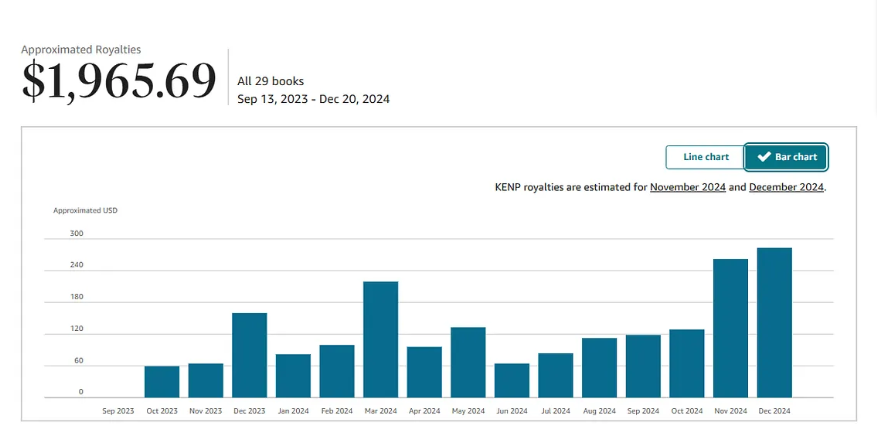
Full-time authors publish more than part-timers, and they make more money. It occurs for several reasons: Amazon’s algorithm rewards prolific authors, readers remember authors who publish frequently, and more books means more chances to be discovered.
The top 1% of authors make a career out of writing 3-6 novels per year. This means treating writing as a business complete with deadlines, production timelines and marketing releases.
What Really Separates Winners From Everybody Else? MARKETING!
The “if you build it, they will come” method hardly ever works on KDP. Authors who succeed at selling books actively market through different means: social media, email lists, book promotion sites, and Amazon ads.
Amazon ads can be especially effective, but learning and budget are necessary to spend the money wisely. Writers who become proficient in Amazon’s ad platform often experience a major difference in sales and discoverability.
For authors looking to expand their marketing knowledge and connect with fellow writers, Reading Awakening offers valuable insights and community support for independent publishers navigating the competitive world of book marketing.
KDP Select vs. Going Wide: The Financial Impact
Perhaps most crucial to KDP authors is the decision whether to go with KDP Select (only on Amazon) or “wide” across platforms.
KDP Select Benefits and Limitations
KDP Select has some perks: access to Kindle Unlimited readers, promotional tools such as free book days, and higher visibility in Amazon’s algorithm. The royalties from the Kindle Unlimited program alone can provide a decent amount of income for authors who write hooky page-turners.
But exclusivity also means forgoing sales on other platforms, such as Apple Books, Barnes & Noble and Kobo. For some writers, that trade-off isn’t worth it — especially those with international audiences or certain genre preferences that have performed more successfully on other platforms.
Wide Distribution: Diversifying Your Income
Writers opting for wide distribution could make money in several ways. And while Amazon is still the top market, there’s plenty of money to be made on platforms like Apple Books or Kobo – especially in particular genres and international markets.
Wide distribution takes more effort in management and marketing across several platforms, but also relies less on the policy adjustments and algorithm updates of a single retailer.
Monthly Earnings Per Author Type
| Writer Category | Monthly Earnings Range | Average Book Count | Main Revenue Source |
|---|---|---|---|
| Hobby Authors | $0 – $50 | 1-3 | Ebook sales |
| Part-time Publishers | $100 – $2,000 | 5-15 | Mixed + KU |
| Full-time Authors | $3,000 – $20,000+ | 15+ | Multiple |
| Top Performers | $20,000+ | 25+ | Series + marketing |
Maximizing Your KDP Royalty Potential
Writing good books is not enough to succeed on KDP. It requires strategic publishing, pricing, and promotion.
Pricing Strategies That Actually Work
The 70% royalty rate forces authors into the $2.99–$9.99 range. A lot of successful authors price that first book at $2.99 or even $0.99 to hook new readers, and then they can price books 2 and beyond at $4.99-$6.99.
This loss-leader model is particularly potent for series, as you get more readers buying into a cheaper product and then buying your higher-priced sequels. Some writers say this approach is responsible for doubling or even tripling their entire series revenue.
Building Series for Long-Term Income
Series always outperform standalone books in sales. Readers who love the first book will buy the whole series – doubling or more your profits.
Planning a series from the start gives you great cliffhangers, character development and works to build anticipation for future books. Some successful KDP authors only write series, and eschew standalones.
Leveraging Amazon’s Algorithm
Amazon’s recommendation algorithm is a critical cog in book discovery. The algorithm features books with steady sales velocity, positive reviews and high page-reads on KU titles.
Some of these are controllable by authors, in terms of launch strategy and review campaigns (as long as they adhere to Amazon’s content guidelines), but also through writing books that entice readers to binge-read. Books that keep the reader’s interest throughout generally sell more copies and also tend to do better for KU page reads.
Common KDP Income Myths Debunked
There are a few misconceptions about KDP earnings that keep floating around newer writers, giving them overly optimistic and unstrategic ideas.
Myth #1: You Can Get Rich Quick with KDP
The thing is, earning serious KDP income takes time and work — and often a lot of upfront investment. Certainly, there are the few who rocket to success as authors – but those certainly are not the rule.
The most successful authors say that it took 12-24 months of constant publishing and marketing to make decent money. Writers hitting six figures tend to be working on their brand for 3-5 years or more.
Myth #2: All You Need is One Hit Book
While a breakout bestseller can help to be sure, long-term KDP success nearly always comes through multiple books. Depending on one title’s performance is a risky business – the Amazon algorithm changes and there can be huge variances in performance of an individual book.
The more consistent KDP earners have wider catalogs – at least 10 books, often in a variety of series or topics. This diversification shields against changes in algorithms and the market.
Myth #3: If Properly Marketed, Every Book Will Take Off
Marketing can certainly help a book find its readers, but it rarely will solve fundamental problems with a title. Bad writing, ugly covers, or books that don’t meet reader expectations in the first place will always struggle—regardless of how much budget you add to marketing.
Successful KDP authors instead tend to focus on making products that solve a real problem their readers have, and then marketing them effectively.
Future of KDP Royalties 2025: Trends And What To Expect
The KDP scene is still changing, and here are a few trends that will affect the earnings of authors in 2025 and beyond.
Artificial Intelligence Impact on Publishing
AI is making it easier to produce content, and writers have taken notice. Writers who know how to utilize AI for research, editing help, and marketing could have a lot to gain.
But readers are getting savvier about AI-produced writing, making human creativity and authentic voice important for long-term success.
International Market Expansion
Amazon is still in the process of opening up KDP to new markets, creating further opportunities for authors to connect with readers around the world. Writers who tailor their work for international markets or translate their books could discover new revenue streams.
Audiobook Growth Continues
And, while not an explicit component of KDP, the burgeoning audiobook business is a major opportunity for KDP authors. If you have a successful book, you can now produce the audiobook version of your book, and in most cases more than double or triple your total income from that title.
Tax Implications and Business Considerations
KDP royalty income is generally classified as self-employed earnings, which have their own tax consequences that authors need to be aware of.
Setting Up Your Author Business
Many successful KDP authors set up an LLC or S-Corp to provide structure for their publishing income as it grows. This can carry tax benefits and some professional standing, but it also demands astute record keeping and business management.
Tracking Expenses and Income
Many KDP authors are eligible to claim a number of business deductions, such as editing or cover design fees, marketing expenses and office supplies. Good bookkeeping is key to ensuring these deductions are utilized and you don’t complicate your tax situation.
International Tax Considerations
Some writers who sell in international markets through KDP are finding that they have quite complicated tax issues. Some tax collection is handled automatically by Amazon, but authors are expected to educate themselves about their obligations in their home countries.
Frequently Asked Questions
What does the average KDP author earn per month?
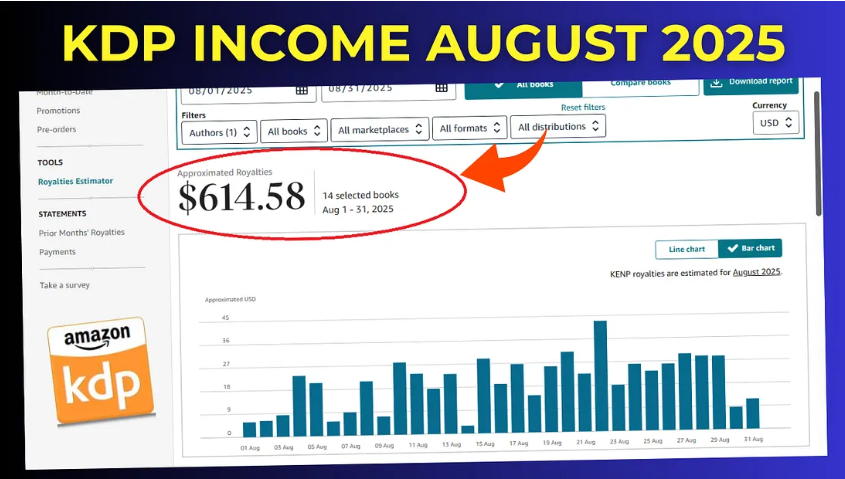
The typical KDP author earns between $10 and $100 per month, but the majority of authors — including both the most successful and least successful — vary widely in earnings. Writers who approach KDP as a business usually make much more.
Is $0.99 or $2.99 best for pricing a book?
For most writers, $2.99 is better than $0.99 because you qualify for the 70 percent royalty rate — that’s about the difference between earning $2.04 per sale versus $0.35 at $0.99. But $0.99 is a great promotional price, and excellent for the first book in a series to attract new readers.
How many books do I have to sell on KDP to earn $1,000 a month?
It all depends on the price you set, the royalty rate, and your marketing effectiveness. Assuming a book priced at $4.99 with a return of about $3.49 per sale, you’d have to sell approximately 287 books per month. But many authors earn $1,000 per month from book sales and Kindle Unlimited page reads across multiple books.
Do I go into KDP Select or do I go wide?
You can see some benefit to KDP Select if you’re just starting out, or in a genre where borrows perform well (like romance or contemporary fiction). Going wide is reasonable if you want to have multiple income streams or if your audience is already engaged on other platforms. Most authors test the waters with KDP Select first and then go wide.
How long does it take to make good money on KDP?
Most successful authors say it took between 6-18 months to start seeing significant income – provided they published multiple books and promoted them consistently. It typically takes most authors 12-24 months of deliberate focus to build toward $1,000+ per month.
Can I genuinely earn a full-time income through KDP?
Yes, there are thousands of authors making full-time livings from KDP, but you have to treat it like a serious business. That means releasing multiple books per year, investing in high-quality production, and learning how to market your work while spending 40+ hours per week working on both the craft and business sides.
How do KDP earnings compare to traditional publishing advances?
KDP authors receive 35-70% royalties on sales of their ebooks and own the rights to their books. Most traditional publishers offer advances of $1,000-10,000 for new authors (though the figure can be much higher for established authors), and give authors royalties only when a book’s sales “earn out” that advance.
What do Kindle Unlimited page reads equate to in book sales?
An average 250-page book that’s read fully through KU pays roughly $1.00 to $1.25 per borrow, as opposed to the same title priced at $4.99 on which you’d make about $3.49. That said, KU books often get read much more than they would earn in direct sales, and some authors find that they make more in total earnings through KU than they would without the program.
You can make money with KDP, but it requires work, planning and the right expectations. The authors who succeed treat their books like a business, they invest in production values and they constantly strive to improve as writers and marketers. Nobody can promise all aspiring writers that they too can achieve six-figure success, but authors who approach KDP with strategy could find not just supplemental income but rather something sustainable – even full-time work.